First Professional Conference!
I was privileged to attend the recent Diabetes UK Professional Conference in Glasgow as one of 16 #dedoc° voices. This was my first national professional conference. I was keen to attended as I have been to local conferences before and always found them extremely interesting and useful in informing my discussions with people with diabetes.
The hardest part was choosing which of the hundreds of sessions to attend as they all looked interesting! I have Type 2 and am chair of a Diabetes Scotland Group with around 280 members, so my selection was influenced not just by my own interests but by what I thought would be helpful to pass on to my members and would also be useful in our awareness raising with the public. The following are just a few highlights!
Diabetes Technology for Type 2
I have been involved in the Diabetes Tech Can’t Wait campaign which has been successful in increasing access to hybrid loop systems for Type 1. As a Type 2 who self-funds a glucose monitor and having spoken to lots of other Type 2’s who have no way of assessing whether their lifestyle changes are having any impact on their glucose levels,
I was very interested in a session in the opening plenary which spoke about research around Pumps and Hybrid Loop Systems in Type 2.
There is a growing T2D population globally and longer duration of disease due to earlier age at diagnosis. 15% of people with T2D use insulin but clinical need is likely to be much higher. The increased use of GLP-1RA and SGLT-2i is likely to reduce, but not eliminate, the need for insulin. A summary of research projects indicated that, for adults with Type 2 who used insulin, closed loop systems safely improved glucose management without increasing hypos, and that fully closed loop removes the need for healthcare professional input for dose. It was encouraging to know that Type 2s might start to benefit more from diabetes technology in the future.
Diabetes Diet
In my experience, the topic that is most of interest to people with Type 2 diabetes is food and weight loss! I was really interested therefore to attend the sessions on What is the Best Diet for Diabetes? and Food without Fear. Diet information is vast and always changing so can be really confusing. Often the focus is on restricting individual foods or food groups and the language used, such as “sinful”, “treat” or “guilty pleasure”, can lead to stress and anxiety with feelings of guilt or shame being brought on by lapses.
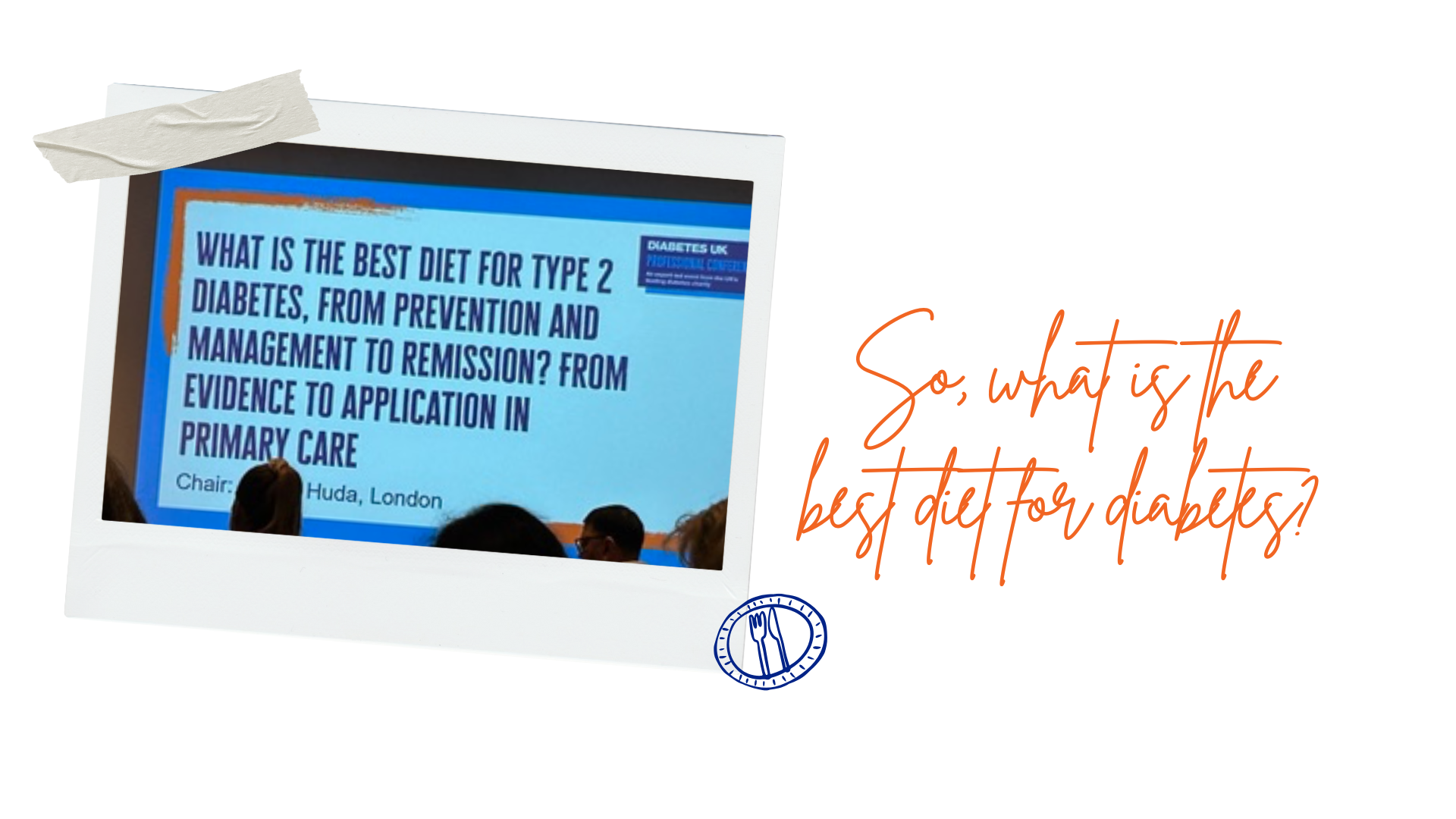
There probably isn’t one! A Mediterranean dietary pattern, low-calorie, total diet placement (TDR) and low carbohydrate diets have all been shown to be effective.
However, all the main evidence-based dietary approaches share some common features:
Emphasis on whole, minimally processed foods
Vegetables, salad, fruit, legumes, nuts & seeds
Higher fibre foods
Healthier sources of fats
Lean sources of protein
Reduction in refined sugars and highly processed carbohydrates
Reduced salt intake
(Although the first stage of TDR may not share these features, the maintenance stage does.)
There is very little difference in the outcome of any of the evidence-based diets in the long run and the really difficult thing is to maintain the changes. The best diet is the one you can stick to so individualisation is key – what is important to you, what are your likes and dislikes, what will fit into your lifestyle. A focus on balance rather than restriction and moving away from “don’t eat xx” to “eat more xxx” is also helpful.
What if you are not overweight?
Although most people with Type 2 appear overweight, a significant number do not. This can be one of the most difficult things for people to understand when they are diagnosed. The session on this topic introduced me to the term TOFI: Thin Outside Fat Inside. It appears that people are genetically programmed to either store fat under their skin or in their organs and it is the fat in the organs, especially the liver and pancreas, that increases the risk of Type 2 Diabetes. It also appears that people who are apple shaped store much more fat in their organs than those who are pear shaped and are therefore at higher risk. The ratio of waist measurement to height may be more accurate than BMI in assessing risk. The message was that everyone has a personal fat threshold which may be less than BMI 25 although still in the healthy weight range. This may be what they weighed when they were younger. So some weight loss might be beneficial even though they do not meet the official definition of being overweight
Diabetes Lifestyle
In addition to diet, exercise is also key in managing diabetes. This session explained that whilst physical activity has only a moderate influence on weight loss, a combination of exercise and diet produced the best results. Even if you don’t lose weight, you can lose visceral fat, and exercise improves insulin sensitivity in the muscles exercised for 2-3 days. Frequency of physical activity is therefore more important than intensity or volume for effects on HbA1c in patients with type 2 diabetes, and a combination of aerobic and resistance exercise is more effective than either type of exercise alone. This was reassuring as the exercise sessions that our group offers provide exactly that combination!
Prescribing for Type 2 Diabetes
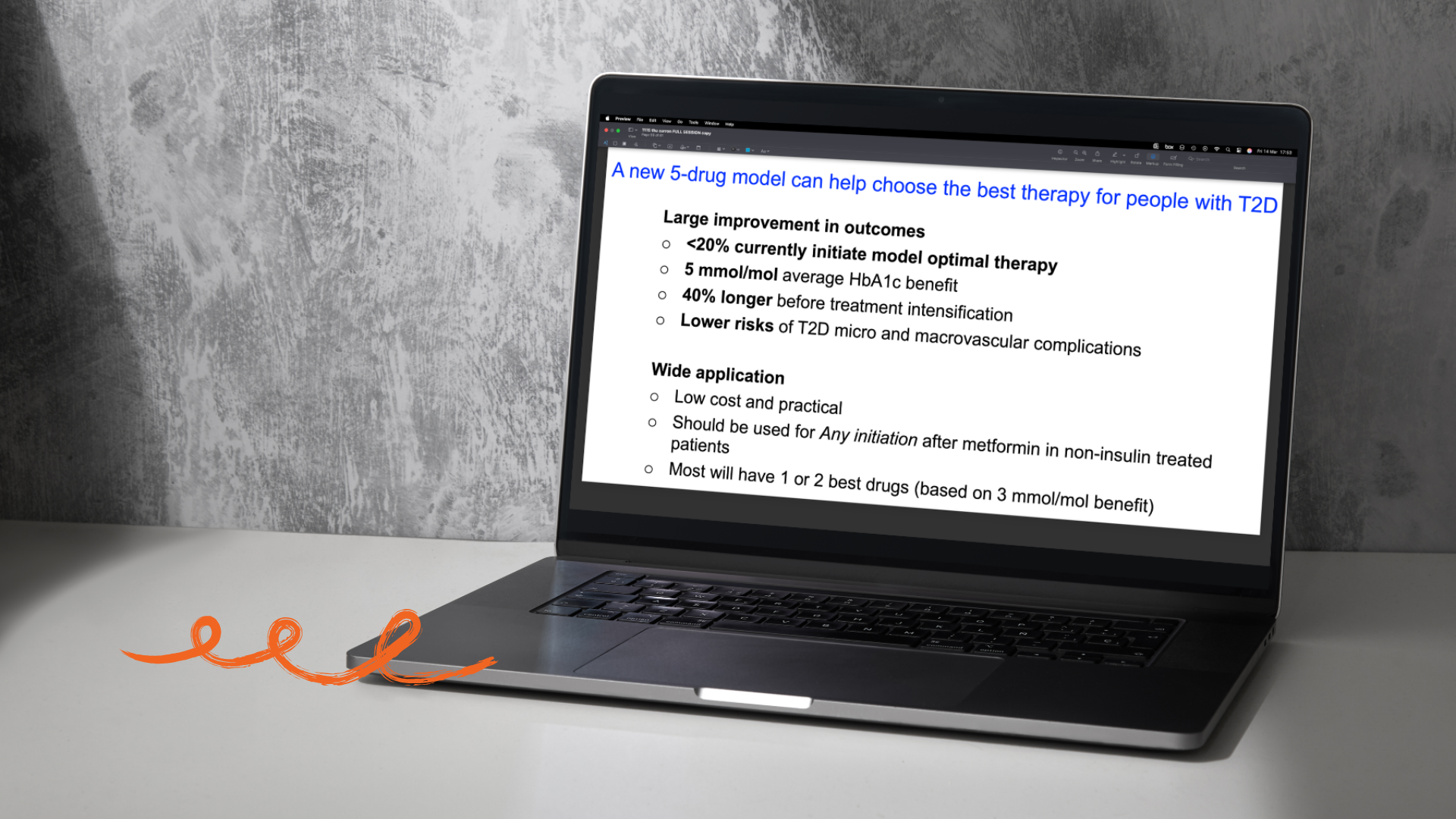
Another issue that people find very confusing is the wide array of diabetes drugs and why everyone seems to be on a different combination. Everyone’s diabetes is different but sometimes it feels that treatment is based on one size fits all. This session presented an exciting breakthrough in the personalisation of type 2 diabetes care. The five-drug model uses routine clinical data such as age, sex, diabetes duration, HBA1c, BMI, HDL-c, total cholesterol to predict the most effective blood glucose-lowering drug for each individual. Low-cost, simple and easy to implement, it holds huge potential to transform prescribing and patient outcomes. This would ensure that not only is everyone on the best possible combination for them, but they can have the confidence that the selection is soundly based and tailored specifically to their needs. It was great to be able to try it out and even better that I appear to be on the correct regime!
This is only a tiny snapshot of the huge amount of information and insight that I gained from the conference. The experience has given me much more confidence that I am providing sound evidence-based information both to our group and to the public, and as such was invaluable. I would certainly recommend that anyone considering being a #dedocº voice should give it a try as it offers a unique opportunity to improve your knowledge and understanding of diabetes.